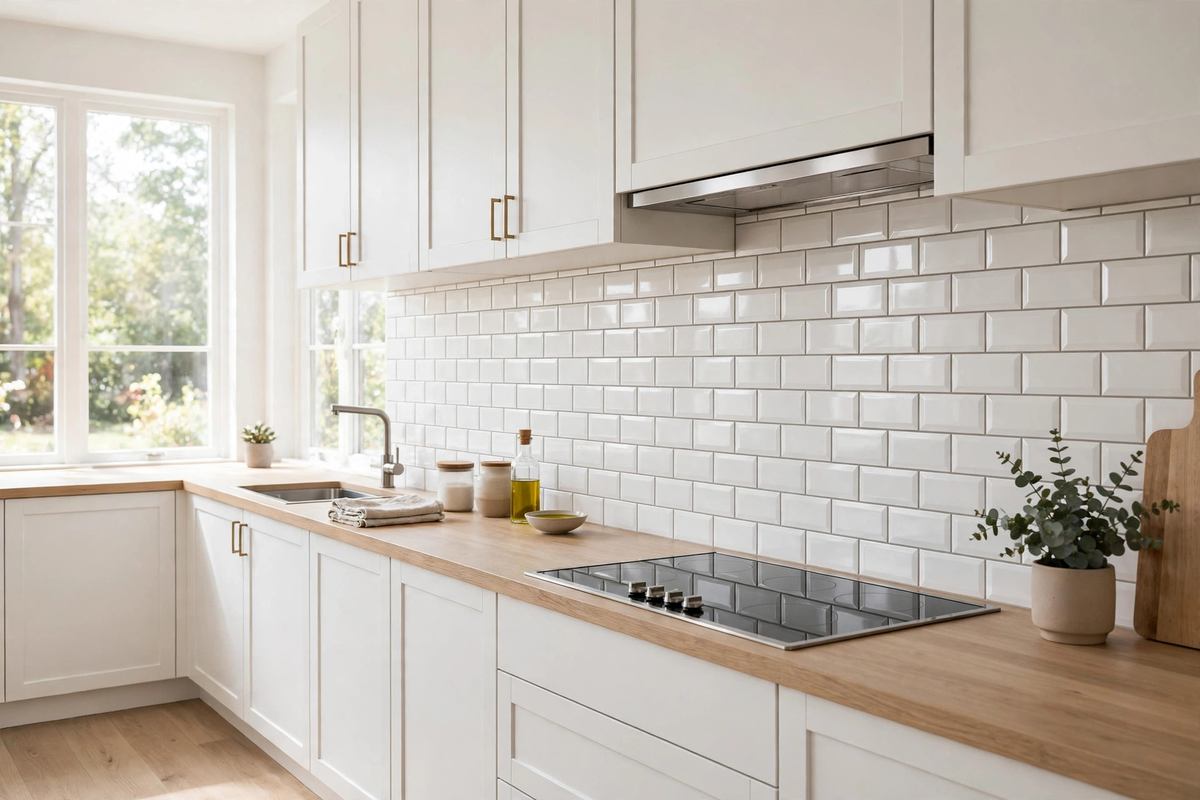
A kitchen backsplash installation costs $500 to $1,500, with an average of $1,000, according to Fixr's 2026 cost data.
That works out to about $25 per square foot across jobs of every size, and the range widens to $5 to $150 per square foot once the finish changes.
We price a typical job against both numbers, because your wall area and your tile each move the total in a different direction.
What a Kitchen Backsplash Installation Costs
The national average sits near $25 per square foot, and that figure blends small and large jobs. A sink-only wall of 8 square feet starts near $200, while a 40 square foot kitchen lands at $1,000.
Size explains less than the fixed items do. Every job carries a minimum labor charge, a setup, and a grout day. Those three do not shrink with your wall.
Those three cost the same at 15 square feet as at 40, which explains most of the gap between your quote and the average. The $1,000 figure also covers a standalone job, and a backsplash added mid-remodel prices as one line in a larger bid, which our kitchen remodel cost guide breaks out.
homewyse's May 2026 estimate for a 129 square foot backsplash comes in at $2,048 to $2,841, or $16 to $22 per square foot. A long wall pulls your per-foot price down because the fixed work spreads across more tile.
| Wall area | Typical installed cost | Per square foot | What drives the number |
|---|---|---|---|
| 8 sq ft (sink only) | $200 | $25 | Minimum labor charge |
| 20 sq ft (galley) | $500 | $25 | One or two outlets |
| 40 sq ft (L-shape) | $1,000 | $25 | Corners and window returns |
| 129 sq ft (large kitchen) | $2,048 to $2,841 | $16 to $22 | Fixed work spread wide |
Read your quote against the row that matches your wall area, and treat a 30 square foot job at $1,500 as above the curve.
The two sections below show which items can explain a number that high. Most of them sit outside the tile price.
Where the Labor Money Goes
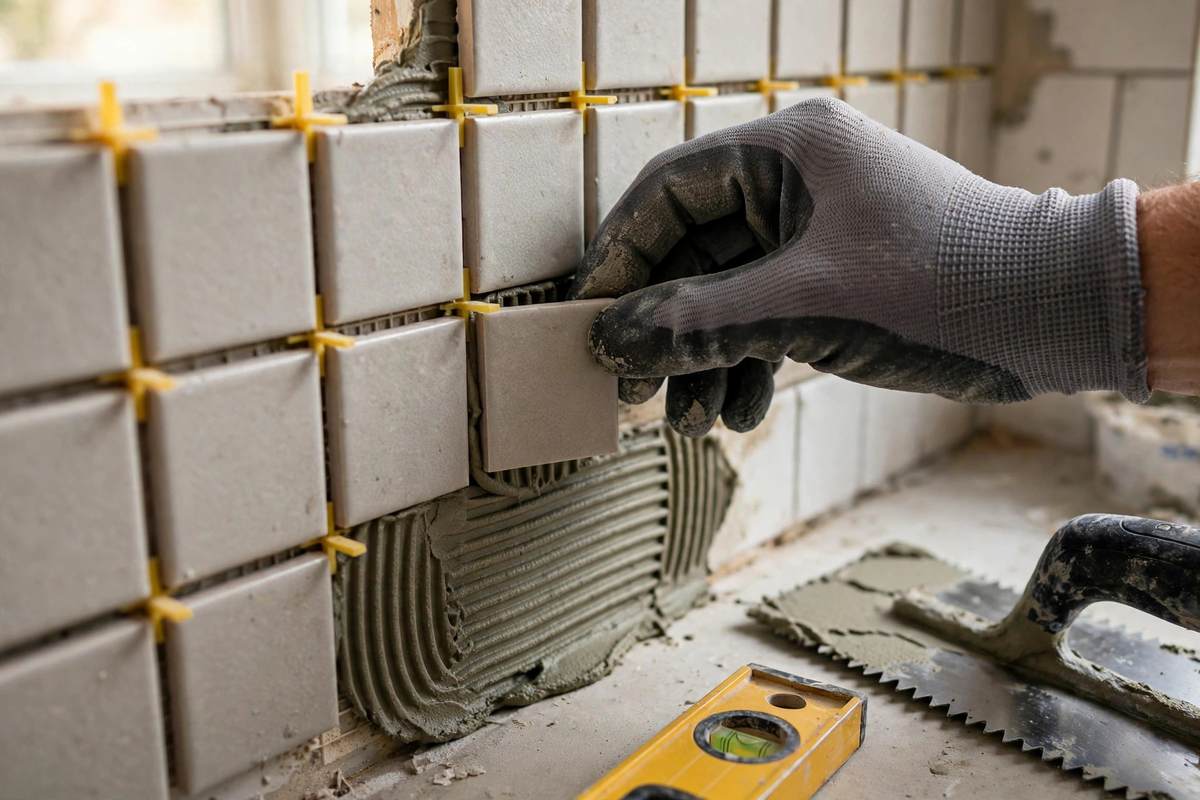
Labor accounts for 30% to 70% of a backsplash bill, or $300 to $700 on a typical job, per Fixr. The crew's day splits into layout, cutting, setting and grout.
Cutting is the part that varies. Outlets, switch plates and window returns each need a clean opening.
A wall with six of those openings takes longer than a bare 40 square foot stretch, whatever your square footage says.
Count the openings before you compare quotes.
Demo and prep add a separate line, and pulling old tile can tear the drywall behind it, so patching or new backer board gets billed as wall repair. Most jobs take one to two days on site, plus a return visit if the grout needs sealing. A slab wall moves faster than small tile because there are fewer joints to set.
Grout day keeps your kitchen out of service for two days rather than one. Tile cannot be wiped down until the grout sets, so plan meals around that window.
Material Bands per Square Foot
Installed material bands start at $12 to $30 per square foot for ceramic tile and reach $30 to $150 for marble, with porcelain, glass and quartz in between.
| Material | Installed per sq ft | Typical total |
|---|---|---|
| Ceramic tile | $12 to $30 | $500 to $1,200 |
| Porcelain tile | $13 to $35 | $560 to $1,400 |
| Glass tile | $18 to $43 | $720 to $1,700 |
| Quartz | $15 to $75 | $600 to $3,000 |
| Granite | $20 to $47 | $800 to $1,850 |
| Marble | $30 to $150 | $1,200 to $6,000 |
The finish decides more of your per-foot price than the labor does once you pass glass, so a $6,000 marble wall and a $750 ceramic one can pay the same installer for the same day of work.
Beadboard panels sit at $18 to $26 per square foot installed. That makes them the cheapest way to cover a large wall without repeating a small tile pattern across it.
A slab costs more per square foot and less in labor, since one piece replaces a hundred joints. Those slabs are cut by the fabricators who also supply counters, and our countertop replacement cost guide prices the material side.
Why a Quote Moves After Demo
A post-demo increase is fair when the scope changes and padded when it does not. Large-format tile, hidden wall damage and added outlets change the work.
A harder-material charge on tile you already specified does not. That is a re-price, and it belongs in the original bid.
One r/Remodel post describes a $1,100 quote that became $1,700 after demo, with large-format porcelain named as the reason. The tile was in the original scope.
Wall damage is the honest exception. Nobody can price torn drywall before the old tile comes off, so a written allowance is the right answer there. Ask for the allowance up front.
"Floor tile isn't designed for the veins to match. You would have to order a slab. Floor tile is mass produced and sold for vein matching. But yeah this is rough."
- r/Remodel, June 2026 (26 upvotes)
Put the material, the pattern and the outlet count in the written scope before demo starts. That one page settles most arguments about whose job the surprise was.
Big-Box Installers Quote After a Measure
Home Depot and Lowe's both sell backsplash installation through third-party crews, so neither publishes a flat price. The quote comes after an in-home measure, built from your wall area and the tile you pick.
The measure is free and the number is not a bid. Book it early. Ask whether demo, wall repair and grout sealer sit inside it.
Store installation typically prices tile at shelf price and labor as its own line. That makes the material easy to compare and the labor hard to, since each store sets its own rate with the crew it sends.
Book the measure before you buy tile, because the measurement decides how many boxes you need and the crew will not cut into a box you opened early.
If the backsplash is one part of a small kitchen refit, our small kitchen remodel cost guide prices the cabinets and counters that share the same week.
Frequently Asked Questions
What Is the Average Kitchen Backsplash Installation Cost?
About $1,000 nationally, inside a $500 to $1,500 range, at roughly $25 per square foot. A sink-only wall can land near $200, and a large marble kitchen can reach $6,000.
Does a Kitchen Backsplash Increase Home Value?
Not in an appraisal sense. A backsplash is a finish and adds no square footage, so its effect is on how the kitchen shows to a buyer. No published cost-value study isolates it from the rest of a kitchen update.